10 февр. 2012 г.

Smith & Nephew plc Announces Result Of New Study For BIRMINGHAM HIP Resurfacing (BHR) System

Smith & Nephew (NYSE:SNN; LSE:SN), the global medical technology business, today announced the results of a new study for its BIRMINGHAM HIPT Resurfacing (BHR) System. The study, carried out at the request of the FDA, followed the progress of the first 400 BHR patients in the United Kingdom and found that after 10 years, 99% were either satisfied or extremely satisfied with their BHR procedure.

"These results further exemplify why the BHR Hip is unlike any other metal-on-metal implant," says John Soto, Senior Vice President for Smith & Nephew's Global Hip Franchise. "Not only does the BHR Hip offer all the advantages of hip resurfacing, including bone-conservation, greater range of motion and decreased risk of dislocation, but it does so while maintaining implant survivorship rates that are on par with, or in some patient populations even better
than, traditional total hip replacement which has long been considered the most successful orthopaedic surgical procedure for relieving chronic pain."

POLARCUP™ Dual Mobility Hip System From Smith & Nephew Now Available in US

Smith & Nephew (NYSE: SNN; LSE: SN), the global medical technology business, is introducing the clinically proven POLARCUP™ Dual Mobility Hip System to orthopaedic surgeons in the US at this year's American Academy of Orthopaedic Surgeons (AAOS) annual meeting in San Francisco. The system is specifically designed to address the challenges of treating patients – in both primary and revision cases – who are susceptible to dislocation and need enhanced stability.

Backed by 10 years of clinical history in Europe and other markets outside the US, the POLARCUP System allows surgeons to implant a smaller, constrained femoral component within a larger, anatomically sized polyethylene head, thus providing greater stability by increasing range of motion and jump distance. "This stability philosophy is widely used in the European market where surgeons have extensive experience with dual mobility in elderly and less active patients," says John Soto, Senior Vice President for Smith & Nephew's Global Hip Franchise.

9 февр. 2012 г.

Anterolateral Approach for Tibial Pilon Fractures

Abstract

The anterolateral approach to the tibia has been popularized for management of tibial pilon fractures. This approach offers the benefit of improved soft tissue coverage and the potential for a lower rate of wound-healing complications by avoiding incision placement over the subcutaneous border of the tibia. Although the fracture pattern dictates specific plate use, antomically designed anterolateral plates are useful for fixation of common fracture patterns. Additional exposures may be required to address other areas of the fracture, such as the medial malleolus, which cannot be accessed through this approach.

Dr Hak is from the Department of Orthopedic Surgery, Denver Health/University of Colorado, Denver, Colorado.

Dr Hak has no relevant financial relationships to disclose.


Correspondence should be addressed to: David J. Hak, MD, MBA, Department of Orthopedic Surgery, Denver Health/University of Colorado, 777 Bannock St, MC 0188, Denver, CO 80204 (David.Hak@dhha.org).
Locking Plate Fixation for Proximal Humerus Fractures

Abstract

Locking plates are increasingly used to surgically treat proximal humerus fractures. Knowledge of the bone quality of the proximal humerus is important. Studies have shown the medial and dorsal aspects of the proximal humeral head to have the highest bone strength, and this should be exploited by fixation techniques, particularly in elderly patients with osteoporosis. The goals of surgery for proximal humeral fractures should involve minimal soft tissue dissection and achieve anatomic reduction of the head complex with sufficient stability to allow for early shoulder mobilization. This article reviews various treatment options, in particular locking plate fixation.

Locking plate fixation is associated with a high complication rate, such as avascular necrosis (7.9%), screw cutout (11.6%), and revision surgery (13.7%). These complications are frequently due to the varus deformation of the humeral head. Strategic screw placement in the humeral head would minimize the possibility of loss of fracture reduction and potential hardware complications.

Locking plate fixation is a good surgical option for the management of proximal humerus fractures. Complications can be avoided by using better bone stock and by careful screw placement in the humeral head.

Repair of Medial Collateral Ligament Injury During Total Knee Arthoplasty

Abstract

Intraoperative midsubstance lacerations of the medial collateral ligament (MCL) must be addressed during surgery, and failure to obtain coronal plane stability could affect patient outcomes and satisfaction. This article reports our results of a series of patients who sustained an intraoperative MCL injury during a primary total knee arthroplasty and were treated by direct primary repair and no change in implant constraint or postoperative protocol.

Over a 5-year period, 9 patients sustained this complication. We reviewed their subjective satisfaction and stability, as well as objective measures such as functional scores, physical examinations, and radiographs. Average patient age was 58 years, and mean patient body mass index was 43.3. All patients were satisfied with the procedure and demonstrated no instability on physical examination. Average Knee Society pain score was 91.5 and functional score was 73.3. No radiographic changes or signs of loosening were noted. This novel approach for intraoperative midsubstance lacerations of the MCL does not involve altering implants or postoperative protocols and has encouraging results.
First comprehensive look at how metal-on-metal total hip replacements fail in patients

A study by Hospital for Special Surgery researchers has provided the first comprehensive look at just how metal-on-metal total hip replacements are failing in patients around the country. Made possible by what is thought to be the largest archive of failed joint replacements, the research should help doctors develop a better hip replacement for future patients. The study will be reported at the upcoming annual meeting of the American Academy of Orthopaedic Surgeons, Feb. 7-11.

"This paper is the first step in what is a path to try to understand what the problems are with metal-on-metal joints," said Timothy Wright, Ph.D., Kirby Chair of Orthopedic Biomechanics at Hospital for Special Surgery (HSS). He said that information gleaned from the study should be useful in improving metal-polyethylene implants, the most common hip implant put in patients today
Zimmer and ISTO Technologies Announce Phase III Clinical Study to Evaluate the Effectiveness of Engineered Juvenile Cartilage to Repair Damaged Knees

Zimmer Holdings, Inc. (NYSE and SIX: ZMH), a global leader in musculoskeletal health, and ISTO Technologies, Inc., an orthobiologics company focused on developing breakthrough products to regenerate and restore function to damaged cartilage and bone, today announced a Phase III clinical study to evaluate DeNovo® ET Engineered Tissue Graft, an engineered cartilage implant intended to repair cartilage defects in the knee. DeNovo ET Graft is being developed under a collaborative relationship between ISTO and Zimmer.


"The DeNovo ET Graft program represents a natural extension to our early intervention and joint preservation portfolio," said Cheryl R. Blanchard, Ph.D., Senior Vice President and Chief Scientific Officer at Zimmer. "This Phase III study will generate meaningful data on the potential of this novel biological solution for treatment of cartilage lesions earlier in the continuum of care."
MAKO Surgical Corp. Showcases MAKOplasty® Total Hip Arthroplasty at American Academy of Orthopaedic Surgeons 2012 Annual Meeting

MAKO Surgical Corp. (NASDAQ: MAKO), a leader in robotic arm assisted partial knee arthroplasty worldwide, today announced the MAKOplasty® Total Hip Arthroplasty (THA) application will be featured at the American Academy of Orthopaedic Surgeons 2012 Annual Meeting (AAOS) being held on February 7-11, 2012 at the Moscone Center in San Francisco, California.


MAKOplasty® THA is the newest application for MAKO's RIO® Robotic Arm Interactive Orthopedic System. The RIO® system will be on exhibit at MAKO's AAOS Annual Meeting Booth #2353. During the meeting, experienced MAKOplasty® orthopedic surgeons will give presentations and hands-on demonstrations of the MAKOplasty® THA application.
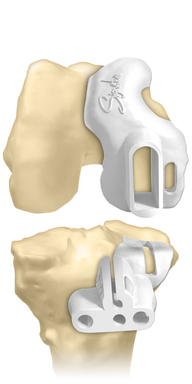
BIOMET BRINGS PERSONALIZED APPROACH TO PARTIAL KNEE REPLACEMENTS


Biomet Orthopedics today announced the launch of the Signature™ Personalized Patient Care System for use with the Oxford® Partial Knee System. The Signature™ Personalized Patient Care system enables surgeons to preoperatively plan a knee replacement surgery and precisely place implants by using Signature™ custom positioning guides.

“With Signature™ and the Oxford® Partial Knee, surgeons now have state-of-the-art technology for patients undergoing partial knee replacement surgery,” said Dr. Michael Berend from the Center for Hip & Knee Surgery at St. Francis Health Hospital – Mooresville in Indianapolis.


Amedica Corporation Announces New Leadership Appointment to Guide Next Phase of Rapid Growth

Amedica Corporation, a spinal and reconstructive implant and instrument manufacturer focused on proprietary silicon nitride ceramic material platforms, today announced leadership appointments designed to drive the company's ambitious growth initiatives in the United States and abroad. 

To support the clinical and commercialization activities that will drive the company's growth, Amedica has appointed orthopaedic surgeon B. Sonny Bal, M.D., M.B.A., J.D., to its Board of Directors.

"As we enter our next stage of development and look forward to commercializing new generation of products, having a forward-thinking industry leader, like Sonny, on the board of the company is invaluable to our organization," said Max Link, chairman of Amedica's Board of Directors.